More than half of Czechs are afraid of something around them. According to a STEM/MARK survey, some type of phobia affects as many as three quarters of Czech women and one third ...

More than half of Czechs are afraid of something in their surroundings. According to research by STEM/MARK, up to three quarters of Czech women and one third of Czech men suffer from some type of phobia. For example, one in six Czechs is afraid of heights. Fears that seem exaggerated to others can, however, reduce quality of life, and ignoring them can even lead to depression.
Almost everyone knows someone around them who is afraid of spiders, crowded public transport or public speaking. Recent research shows that as many as one in two Czechs has a disproportionate fear of certain things or situations in their life.
Animal phobias are reportedly the most common - the largest share of Czechs are afraid of spiders, snakes or mice. In second place comes fear of heights, which affects around fourteen percent of people. Thirteen percent of Czechs experience claustrophobia, or fear of confined spaces.
Experts don't agree on when phobias and fears arise, but the larger group of them leans toward the view that unpleasant memories and experiences from childhood are to blame for groundless panic.
Research also points out that if a parent suffers from a particular phobia over the long term, their children are many times more likely to fear the same things or situations too. It is not a matter of heredity, though, but rather a learned response.
Those around them often don't have much understanding for a phobia and suspect the person of needless hysteria or of trying to draw attention to themselves. In most people, however, automatic physiological reactions are triggered in addition to the unpleasant thoughts. Total paralysis can set in, leaving the stricken person unable to move or communicate at all. A pounding heart, sweating, rapid breathing or dizziness are also common.
That's because the body reacts to the stimulus the same way it does to life-threatening situations. In that moment, it doesn't distinguish whether it's facing a venomous tarantula or a small, harmless spider.
It is precisely these unpleasant physical and mental reactions that can make life very difficult for people with anxiety disorders. Because they usually don't want to face such states again and again, they consciously avoid unpleasant situations. According to experts, however, that's a mistake.
That's because the most effective method of treating irrational fears is so-called exposure therapy. It consists precisely of exposing the person to the situations they fear so much.
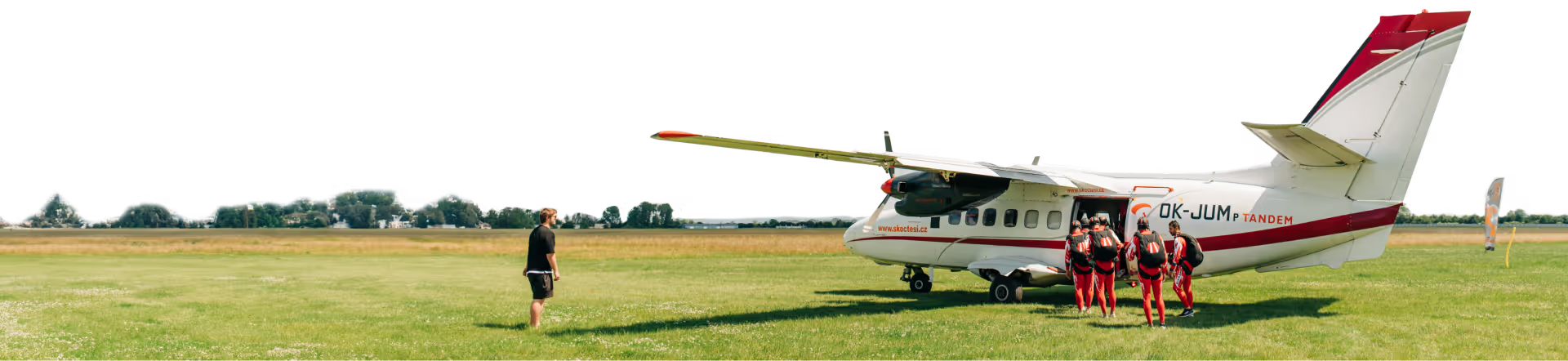
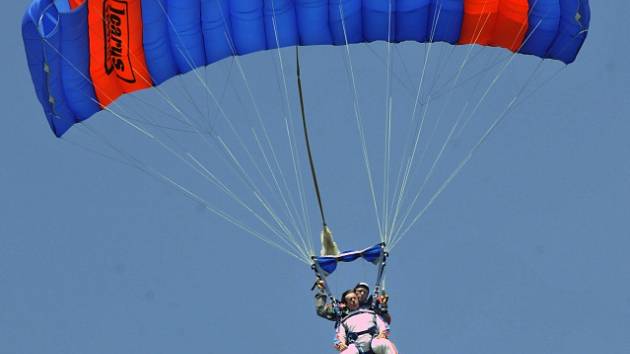
“We get people here who are terrified of heights. But when they pluck up the courage and do, say, a tandem skydive, there's usually enormous relief. They've survived, unscathed, the very thing they had been so afraid of all their lives. It often boosts their overall self-confidence and their appetite for trying new things,” confirms Martin Dlouhý of JUMP-TANDEM, a company that focuses on tandem skydives and also offers, for example, a skydiving school.
He thus confirms the experience of psychotherapists. Gradually exposing a person to the unpleasant situation they fear so much leads them to take control of their reactions. People suffering from phobias begin to realize that they can regulate their reactions. They gain distance from the problem and gradually suppress the fear.
With arachnophobia, for example, a client undergoing therapy is at first given only pictures of spiders. Next, they imagine what it's like to see a spider at home or feel one on their skin. In the final phase, they practice placing live spiders on their body. Some Czech zoos even hold events where they try to ease people's phobias of various animals and let them touch reptiles, mice or various spiders under expert supervision.
In the case of a fear of dirt, filth or germs - so-called mysophobia or germophobia - it is, on the contrary, important to break the rituals that ease the anxiety. People suffering from these phobias tend to wash their hands constantly or disinfect the house. But it is important not to give in to the urge to perform the ritual and to gradually lower your standards of cleanliness. Therapists therefore recommend writing down a list of places and situations that trigger panic, such as public restrooms, a doctor's waiting room or the dumpsters in front of your building.
After that, it's again necessary to deliberately put yourself in these situations, be aware of your feelings and try not to give in to your usual reaction. It pays to write down your feelings and rate how unpleasant the experience was on a scale of one to ten.
Changes in this case are usually not as fast, so it is good to keep a record of your successes. Of course, the point is not to stop cleaning your home or to stop washing altogether; people just have to learn to tolerate anxiety, find a healthy balance and not let obsessive thoughts dictate their lives.
Link to the full article here: https://www.denik.cz/ekonomika/kazdy-druhy-cech-trpi-fobii-nejucinnejsi-je-strachu-celit-rikaji-odbornici-20180320.html
Want to know what weightlessness feels like in a long freefall? Experience it. You’ll see it’s worth it.
You jump with a parachute fitted with the CYPRES safety computer and an instructor with thousands of jumps behind them. JUMP-TANDEM is the largest skydiving operator in Czechia.